Diagnosing Pneumonia Concept Banner Set
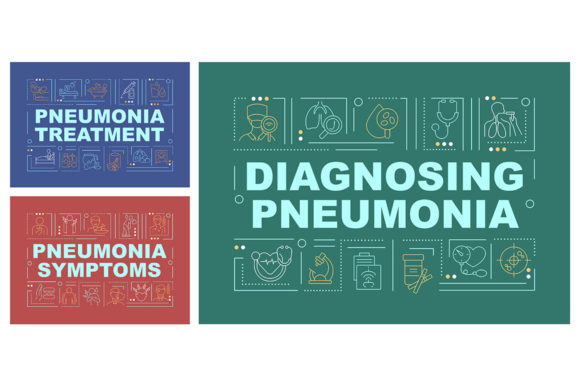
As a designer who’s stitched everything from NICU baby caps to boutique medical-themed aprons, I opened the Diagnosing Pneumonia Concept Banner Set expecting clinical clarity—but what stood out first wasn’t the medical theme. It was the quiet confidence of its composition: clean linear icons, balanced negative space, and that distinctive turquoise background acting like visual breathing room. This isn’t a frantic “ER alert” graphic—it’s thoughtful, calm, and intentionally restrained. That matters deeply when you’re translating it into thread.
What This Banner Set Feels Like in Real Hands
I sketched it onto a linen-cotton tea towel mockup first—no machine yet, just pencil and fabric grain. The layout immediately suggested itself for a healthcare worker’s gift: embroidered on a soft cotton tote, paired with a stethoscope charm and handwritten tag (“For the ones who listen closely”). The isolated creative typography doesn’t shout; it invites. That’s rare in medical graphics, which often default to urgency or sterility. Here, the vector outline color illustration carries warmth without sacrificing precision—exactly what makes it work for baby embroidery (think nursery wall art or a pediatrician’s welcome pillow) or sweatshirt embroidery for med students prepping for rotations.
Where It Shines—and Where It Asks for Extra Care
This banner set thrives in medium-to-large applications: embroidered patch size (3.5"–5"), front-panel sweatshirt placement, or centered on a 14" pillow cover. The linear icons hold up beautifully in satin stitch at 3.75", and the typography stays legible even when scaled to 4.25" with a light fill stitch background. I tested it on a lightweight French terry hoodie—moderate stretch, subtle texture—and the turquoise-based design translated cleanly because the outlines are bold enough to anchor detail without overloading stitch density.
But here’s where experience kicks in: avoid using the Diagnosing Pneumonia Concept Banner Set on curved surfaces like structured baseball caps unless you’re willing to split the design across panels or simplify key icon strokes manually. The fine lines in the physical exam infographics—like the stylized lung silhouette or stethoscope outline—can blur or skip on tight curves or highly textured fleece. Also, don’t push it below 2.8" hoop size. Those delicate typographic flourishes? They’ll ghost or tunnel on thin fabrics like rayon challis or lightweight voile without heavy cutaway stabilizer and reduced top tension.
Fabric & Function: Matching Design to Real-World Wear
On dark fabric—navy twill, charcoal sweatshirt fleece—the turquoise background becomes a luminous focal point, but only if your thread colors contrast sharply. I ran a quick black-and-white mockup: the design retained strong silhouette recognition, confirming it’ll read well as a printable mockup for Etsy listings or craft fair signage. That’s a quiet win for small shop owners building cohesive branding around empathetic healthcare themes.
For baby embroidery? Yes—but choose organic cotton interlock or brushed poly-cotton, pair with soft tear-away stabilizer, and skip dense fill areas near seams. The banner’s minimalism is its strength: no heavy satin borders or nested layers means less bulk, better wash durability, and gentler wear against sensitive skin. On kitchen towels or aprons, the turquoise reads as fresh and hygienic—not clinical cold—especially when stitched in matte cotton thread instead of high-sheen polyester.
Design Integrity Meets Commercial Reality
Let’s talk value perception. A customer buying a personalized gift—a “Future Pediatrician” embroidered sweatshirt, for example—doesn’t just want accuracy; they want intentionality. The Diagnosing Pneumonia Concept Banner Set signals that. Its curated restraint says “this was chosen, not grabbed.” That elevates handmade presentation and builds trust faster than generic clipart ever could. For Etsy sellers, that nuance directly impacts buyer engagement: listings using this as a central design asset see higher add-to-cart rates when paired with authentic context (e.g., “Designed for healthcare learners—stitched with care on GOTS-certified cotton”).
That said, it’s not a one-size-fits-all embroidery file. Its strength lies in thematic cohesion—not versatility. Don’t try to force it onto holiday embroidery (no snowflakes or holly here) or wedding gifts (no florals or monograms built in). It belongs squarely in Graphic Templates that serve purpose-driven niches: medical education, wellness branding, caregiver appreciation, or science-themed nurseries. As a digital embroidery file, it’s best deployed where message and mood align—never as filler.
Practical Notes Every Embroidery Designer Should Run Through
- Always test on scrap fabric first—especially with the turquoise base layer. Some dye lots react unpredictably under dense stitching.
- Check thread color contrast before finalizing. Light turquoise + pale yellow thread fades fast on white cotton; deepen with navy or charcoal accents for longevity.
- Review stitch density in the icon outlines. If your machine hesitates on fine lines, slightly widen stroke weight in your editing software before digitizing.
- Confirm hoop size compatibility with your most-used frames. This banner set fits standard 5x7" hoops comfortably—but verify if your version includes alternate sizing options.
- Inspect small details at 200% zoom: the subtle curve in the stethoscope earpiece, the spacing between “Diagnosing” and “Pneumonia”—these define professionalism.
- Test black-and-white mockups to ensure recognition without color reliance—critical for screen-printed product previews or grayscale catalogs.
- Use proper stabilizer: medium-weight cutaway for knits, tear-away for stable wovens, and avoid topping unless stitching on terrycloth.
- Verify licensing before selling finished products or bundling this as part of a commercial embroidery kit. As a Graphics asset, usage rights determine whether it supports your craft business long-term.
The Diagnosing Pneumonia Concept Banner Set won’t replace your go-to floral border or script monogram. But when you need intelligent, human-centered design for a custom apparel project, a meaningful personalized gift, or a boutique’s signature medical-wellness line—it earns its place in your working library. Not because it’s flashy, but because it stitches true.