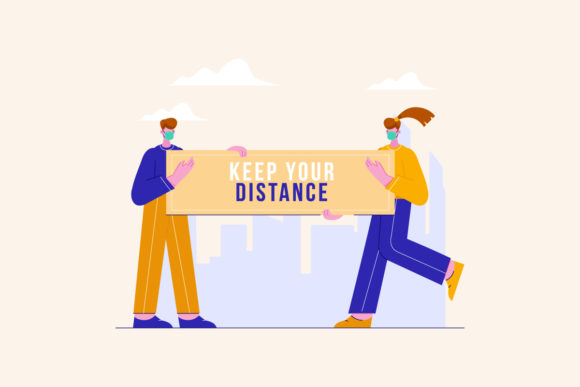
Social Distancing Sign Campaign Vector: Graphics & Illustrations
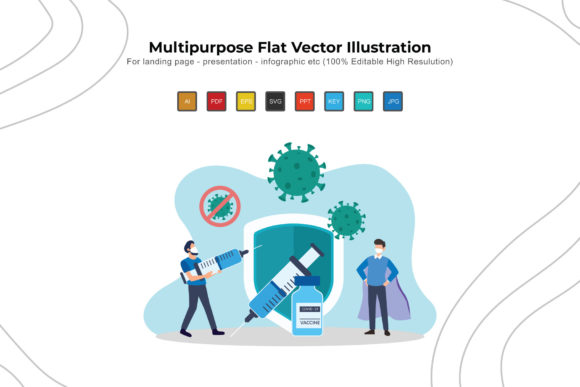
As a digital product creator who’s launched over 200 Etsy listings and managed design assets for print-on-demand brands, I opened Social Distancing Sign Campaign Vector expecting utility—not nostalgia. What stood out immediately was its clean, contemporary rhythm: balanced negative space, intentional line weight, and a palette that leans into accessible RGB warmth without sacrificing professionalism. It’s not playful or whimsical, nor is it sterile or bureaucratic. Instead, it lands in that sweet spot—modern, empathetic, and quietly confident—ideal for small business branding, wellness studios, remote-work coaches, and community-focused creatives.
This graphic design asset feels built for real commerce. The 100 vector files aren’t just quantity—they’re intelligently grouped: icons with and without halos, isolated figures, layered compositions, directional arrows, and modular spacing markers. Each is fully editable in Illustrator or Affinity Designer, with ungrouped layers and named paths—no hunting through nested groups to adjust a single arm or signpost. That saves hours when prepping SVG designs for Cricut projects or refining PNG designs for planner stickers.
I tested Social Distancing Sign Campaign Vector across six product types before finalizing my shop listing: printable wall art (8x10 and 16x20), Canva template kits (presentation slides + social media carousels), sublimation-ready mug designs, tumbler wrap layouts, digital sticker sheets for GoodNotes and Notability, and a themed bundle called “Safe Spaces Toolkit” for educators and HR consultants. In every case, the vectors scaled crisply, retained legibility at thumbnail size, and adapted cleanly to both light and dark mockups. On white backgrounds, the soft shadowing added subtle depth; on charcoal mockups, the RGB color values held contrast without needing manual adjustment.
Where this illustration shines commercially is in visual storytelling. Unlike generic clipart, Social Distancing Sign Campaign Vector conveys intention—not just distance, but care, structure, and shared responsibility. That nuance elevates product mockups. A tote bag preview with one centered figure and a gentle “Breathe. Space. Respect.” tagline reads premium, not pandemic-era filler. Same goes for nursery prints—swap out medical motifs for nature elements using the base vectors, and it becomes part of a “Calm Home Collection.” For bloggers and content creators, these illustrations serve as consistent visual anchors across blog graphics, email headers, and Instagram story templates—strengthening brand identity without repeating the same icon.
It works especially well in themed bundles. I paired it with minimalist serif fonts (for authority) and friendly sans serifs (for approachability), then added two handwritten-style callouts (“We’re in This Together” and “Space Is Kindness”) drawn directly from the vector shapes. That turned a single graphic design asset into a cohesive digital download with perceived value far beyond its file count.
That said, use caution in specific contexts. Tiny sticker designs under 1 inch? Avoid the more detailed multi-figure scenes—the spacing markers and overlapping silhouettes lose clarity. For Cricut or Silhouette users, always inspect SVG cut quality: some grouped signage elements require ungrouping and path simplification before cutting vinyl cleanly. Also skip dense, text-heavy Canva templates where the vector competes for attention—this illustration thrives with breathing room, not clutter. And never assume automatic contrast on dark packaging design; test your mug or tote mockup against actual black or navy substrates before approving production files.
Before publishing any product using Social Distancing Sign Campaign Vector, I run five quick checks: First, open the PNG version and verify full transparency—no hidden white boxes. Second, drop the SVG into a Cricut Design Space test project and run a “simplify” pass to confirm clean cut lines. Third, preview the thumbnail at 200px width—does the core shape read instantly? Fourth, check how it renders in grayscale for print-on-demand previews. Fifth, cross-reference the commercial license: yes, it permits finished goods, but only if you add significant original design work—no reselling raw vectors as-is.
For Etsy sellers and creative marketplace vendors, this asset strengthens listing credibility. Use it in your primary product mockup, then rotate variations across secondary images: one with a muted background, one overlaid on a real desk photo, one cropped tightly for mobile-first scrolling. That signals professionalism—and improves click-through potential. For Canva template sellers, embed these vectors as non-destructive Smart Objects so buyers can recolor without breaking layers. For crafters building scrapbooking kits or digital paper packs, isolate individual figures as standalone PNGs with transparent backgrounds—then pair them with coordinating patterns in the same color family.
One underrated strength? Its flexibility in seasonal pivots. While rooted in public health awareness, the underlying visual language—gentle geometry, human-centered scale, quiet confidence—translates effortlessly into broader themes: boundary-setting for mental wellness, spatial mindfulness for yoga studios, or even collaborative workflow visuals for remote team tools. That longevity means your initial investment supports multiple product iterations across months, not just one timely launch.
If you're curating a digital product shop for small business branding, educator resources, or wellness-themed merchandise, Social Distancing Sign Campaign Vector isn’t just another illustration—it’s a foundational design asset. It bridges function and feeling, scales reliably across formats, and invites customization without demanding advanced skill. Just remember: test early, simplify where needed, credit thoughtful usage, and always let the buyer’s brand—not the vector—take center stage.